

Source: Ruimte + Wonen (Dutch)
Housing associations in Amsterdam provided the municipality of Amsterdam with extensive insight into their financial capacity and resilience, with the aim of making agreements on the delivery of new homes and the investment in existing stock. An independent assessment by Ortec Finance defined the financial capacity and provided a framework for making the agreements. “Because the assessment indicated the (un)feasibility of certain wishes, it created room for a different conversation and for making choices other than the obvious ones.”
As housing policy in England becomes increasingly shaped at a local and regional level through devolution deals, combined authorities, and mayoral housing strategies, the relationship between housing associations and local government is becoming more central to delivery. This article examines how housing associations in Amsterdam and the municipality worked together to agree shared priorities within clear financial limits. The Amsterdam experience offers relevant lessons for UK social housing providers operating in devolved systems, where transparency on financial capacity, clearer trade-offs, and evidence-based negotiation are increasingly essential to aligning local ambition with long-term viability.
Normally, an assessment of housing association finances is carried out when drafting agreements between the municipality and the housing associations. The associations themselves calculate which agreements are feasible and to what extent they can meet the wishes of the municipality and tenants.
In Amsterdam, however, the associations decided to carry out a comprehensive financial capacity assessment before negotiations began. The results were then shared with all relevant stakeholders. This level of transparency is essential because robust financial evidence enables all parties involved to understand the level of financial headroom available for making agreements. In recent years, the financial capacity of housing associations has been subject to much debate.
Dutch housing associations have to operate within the National Performance Agreements framework and national policy on rent levels. In addition, they face fluctuations in interest rates and the rapid rise in construction costs. This makes a substantial understanding of housing association finances a complex matter.

Lidewij van Bakel
“Together, the associations, municipality, and tenants face enormous challenges; reticence and secrecy do not help with that.”
Photo: AFWC
Complex Process
Associations are legally obliged to make a reasonable contribution to the housing vision of the municipality in which they are active. These agreements cover the delivery of new homes, the affordablity of rent, and the quality and livability of housing.
In Amsterdam, these agreements are made every four years. Included in this process are nine associations (united in the Amsterdam Federation of Housing Associations (AFWC)), nine tenant organisations (united in the Federation of Amsterdam Tenant Organisations), several municipal departments, an aldermen for housing, and an alderman for land and development; making performance agreements a complex process. In addition, the municipal council and various action groups actively contribute to the discussions.
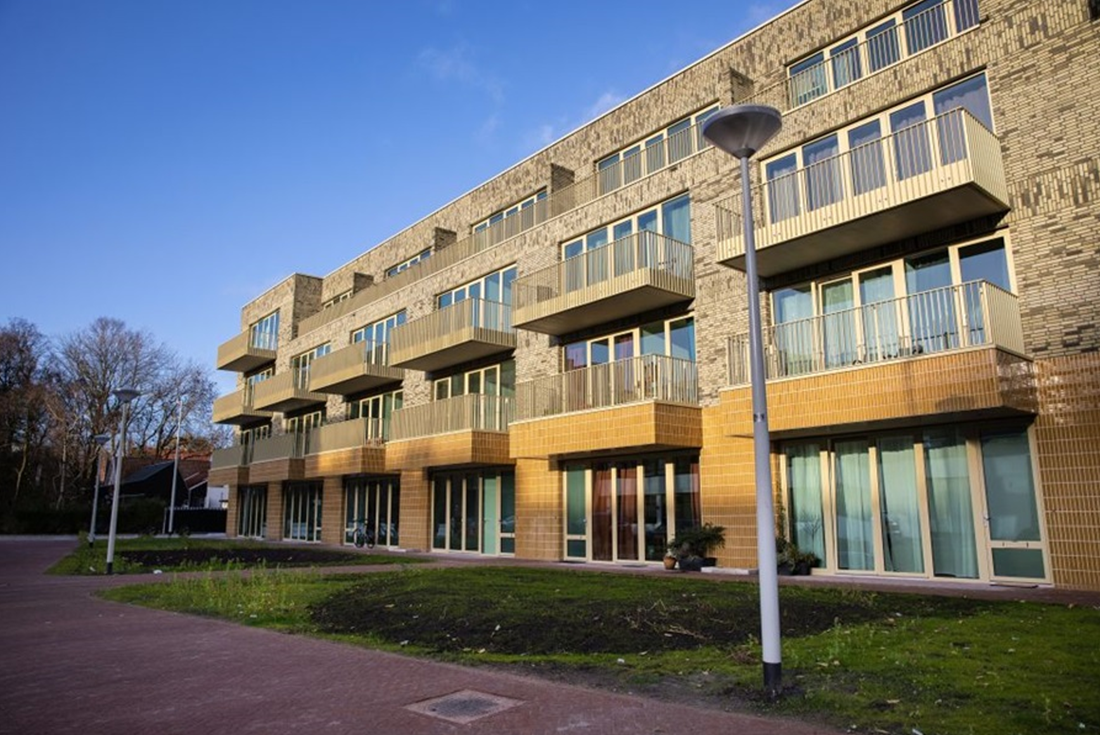
Associations are legally obliged to make a reasonable contribution to the city’s housing vision and must make agreements about delivery of new homes, keeping rents affordable, the quality of housing, and livability. Photo: AFWC
For the agreements concerning the period 2024–2027, the parties wanted to firstly understand the other better. The complexity of the city’s challenges and the large number of parties involved made extensive exploration of each other’s motives difficult yet necessary. The municipality had already articulated in the Amsterdam Housing Vision what its main focus was . They had set their ambitions high, and in the vision established by the municipality, it was established that not everything was achievableand there was a lack of clear choices.
In their “offer,” the associations clearly set out what was feasible according to the sector. During the subsequent discussions with the tenants’ federation, the municipality, and the associations, choices were made and priorities established. By first examining the underlying values of all parties, identifying the shared objectives and areas of tension, and then determining a mutually beneficial plan a picture of the shared strategic challenge emerged. It was clear that the challenges were substantial and that not everything can be addressed at once, due to financial constraints and implementation capacity due to a lack of manpower.
Independent Financial Capacity Assessment
The financial capacity assessment of housing association plans supported these discussions by providing a framework of what was possible and identifying key risks, constraints and sensitivities. The assessment also showed that the Amsterdam associations were operating close to their financial limits in order to address as many challenges as possible.
Ortec Finance carried out the assessment in the spring of 2023. They reviewed the associations’ plans from the “offer” and compared them against the financial capacity. At 82%, the associations utilised a significant proportion of available financial headroom with the plans they had. Ortec indicated that after the plan period, sufficient headroom must be retained to accommodate additional tasks, such as further investments in decarbonisation and new builds.
Moreover, to safeguard long-term financial viability, a buffer is required for adverse economic or policy shocks. A year later, we now know these financial buffers have been eroded by higher costs relating to construction and interest rates.
Significant New Borrowing
To make the necessary investments, Amsterdam associations will raise approximately €11 billion in new borrowing over the coming years, allowing them to realise 42% of their plans. The remainder will be paid from rental income (29%) and capital receipts from asset disposals (29%). In recent years, the focus in Amsterdam has predominatly been on investing in new builds, however, in the coming years, more will be invested in the quality and sustainability of existing stock (43% of investments). The assessment indicated that whilst feasible, these investments in existing stock significantly strain the financial resources of the associations.
When a home is made more sustainable or improved, the associations do not raise rents, nor does the property increase in value. The associations borrow vast sums of money to pay for these improvements, and that debt will eventually need to be repaid. There is therefore a limit to how much can be borrowed for existing homes without placing pressure on long-term financial viability. An example of this was that, in its report, Ortec Finance revealed the way Amsterdam housing associations finance decarbonisation is not financially sustainable over the long term.
The report also calculated a range of stress scenarios to examine whether certain policies would be financially feasible. For example, the municipality wanted to know how a halt on asset disposals would effect the associations’ operations, and how it would impact future plans for sustainability measures and new construction. The report indicated that such a step would materially weaken financial resilience and had adverse long-term implications for investment capacity.
The associations asked Ortec Finance to make a risk assessment of deteriorating economic conditions so they could determine what buffer was necessary. Specifically given the large increase in loans, the researchers concluded that an increase in interest rates would have a major impact on spending capacity and the associations’ plans.
Insight into Considerations
After establishing the shared values, wishes, and ojectives, the report helped clarify which agreements the housing associations should and should not make. The transparency also opened up a constructive dialogue about the choices being made and gave the partners insight into the considerations. Because the associations ultimately remain responsible for their own operations, the municipality and tenants cannot directly intervene in these choices through performance agreements. However, because the choices being made were visible, the partners could express their opinions and ask for reconsideration or adjustment over time.
While the report largely resolved the information gap for tenants and the municipality, corporate finances still remained a complex matter. How do you have a conversation about the possibilities if two of the three discussion partners are not aware of the limits or do not understand the consequences of policy choices? The report meant the conversation about possibilities could at least be based on verified figures.
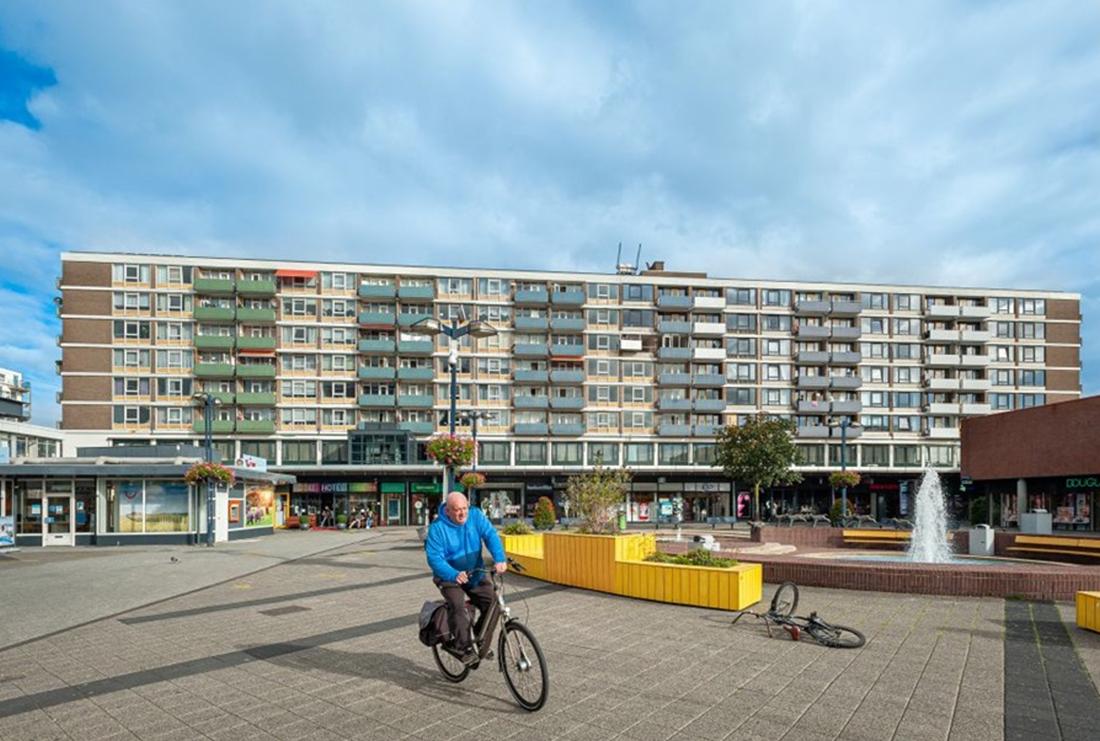
Associations will sell fewer homes in areas with little social housing and more in areas with a lot of social housing, writes Lidewij van Bakel of AFWC. Photo: AFWC
It was clear to all parties that not everything could be achieved at once, creating a shared responsibility to make realistic agreements. Trying to fulfil everything was impossible and was no longer a useful approach for making agreements. The report also helped to alleviate external pressure from, the municipal council and society ensured that within the available possibilities, the highest achievable agreements were made.
On the other hand, the report also caused frustration amongst the other parties; if the possibilities were so limited, what role would they have to fulfil and what influence could they still have on future policies? Yet that influence did exist: although the financial headroom was limited, the three parties jointly chose to focus on crucial issues. By demonstrating the (un)feasibility of certain ojectives, the assessment created scope for more evidence-based decision-making. Combined with the discussions about underlying values, the parties were able to explore other solutions that still honored the values, beyond the obvious choices.
No halt on asset disposals
There was no halt on asset disposals, but instead a shift in the strategic approach to asset disposals. It was agreed associations would undertake fewer asset disposals in areas where there was a limited supply of social housing and increase asset disposals in areas with higher concentrations. Through having constructives conversations, it became clear the municipality’s concern was not about the number of disposals, rather about maintaining the diversity within city.
By selling less in the central area and more outside it, capital receipts remain unchanged, and spending on new construction and sustainability is secured. This financial transparency led the parties to seek an alternative plan resulting in the three parties ensure the preservation of the mixed city.
The limitations for associations to borrow was also a topic of discussion. To meet the challenges, capital receipts from asset disposals and rental income were critical to funding the investment program, partly because due to a debt ceiling, three associations had reached their borrowing limits. Although the tenants advocated rent freezes and the municipality for a halt to disposals, the financial assessment made the obstacles explicit, including the debt ceiling and the amount of tax liabilities. In response, the parties decided to send a joint letter to the House of Representatives.
Intensive Discussions
Together, the associations, municipality, and tenants faced enormous challenges with the restraint and secrecy further impeding. The discussions leading up to the performance agreements were extensive and exhaustive and whilst the financial assessment was an additional tool, it still cost additional time and money, both from the process itself and for the associations’ staff. The question is whether all that was necessary, and if so, why. Transparency is an important foundation for trust in collaboration and necessary to support effective cooperation. If partners are unaware of each other’s interests and considerations, they are unable to take them into account in their own decision making. In Amsterdam, it was often unclear what the associations were doing and why. Behind many policy choices there are a set of complex possibilities and consequences that are invisible or sometimes incomprehensible to external stakeholders. Discussing these considerations was therefore an important building block for mutual trust.
Ideally, all parties would oversee the playing field, trust would be self-evident, and a large-scale expensive financial assessment with discussions about values and challenges would not be necessary. However, establishing trust takes time and must be maintained. Due to the pressure from the enormous challenges and the relative unfamiliarity and differing challenges of all parties involved, it was necessary in Amsterdam to invest in this extensive process and in financial transparency. Over the coming years, parties will continue to work on increasing insight into each other’s considerations. In four years, a financial assessment will likely remain part of the process toward new performance agreements, together with the discussion about values ensuring everyone can have conversations based on the same information.
And perhaps the assessment could be carried out reciprocally: the municipality could provide insight into its investments and considerations, viewed in conjunction with its other expenditures. What choices does the municipality make with regard to housing and social rent? What does it invest in affordability, sustainability, and livability, and how visible are these investments in the city? When all three parties are transparent, they jointly lay the foundation for inclusive and far-reaching cooperation.
AFWC
The nine members of the Amsterdam Federation of Housing Associations (AFWC) own approximately 191,000 homes. That is about forty percent of all homes in Amsterdam. The AFWC promotes cooperation between associations and the city, advises on joint policy, and conducts research. Lidewij van Bakel is senior policy advisor for new construction and strategy.
Questions about the Ortec Finance analysis
If you have any questions, contact David using the details below he will be happy to help.
More about financial management for housing associations
Contact

David Kronbichler
Managing DirectorRelated Insights
-
 24 February 2026Unlocking Rent Convergence: Why UPRN‑Level Insight Is Essential
Learn how UPRN-level data helps UK housing associations achieve fair rent convergence and strong financial planning.
-
 17 February 2026Dutch Social Housing Finance Under Pressure
UK Social Housing can draw key lessons from Dutch trends: record-high operating costs, rising personnel expenses, and significant increases in home improvement investments point to mounting financial pressures for housing associations.
-
 27 January 2026Quarterly Economic Outlook for UK Housing Associations
Discover how UK housing associations can navigate economic volatility with quarterly financial planning, regular updates on key macroeconomic indicators, and sector-specific insights to support informed decision-making in a changing environment.
-
 24 December 2025Devolution, Delivery and Financial Reality: Lessons from Amsterdam’s Housing Partnerships
Discover how Amsterdam’s housing associations and municipality use transparent financial assessments to set realistic, joint priorities for social housing investments: offering lessons in partnership, evidence-based planning, and sustainable delivery for the sector.
-
 24 November 2025Terugkijken webinar VMS De nieuwe standaard voor vastgoedwaardering
 -
 17 November 2025Optimizing Real Estate valuation: insights gained from student research
Recently, we had the privilege of learning from a student’s thesis that explored advanced techniques in property valuation.
-
 11 September 2025Spring 2025 rent freeze proposal in Dutch social housing
Discover how the Dutch Spring 2025 rent freeze proposal sparked sector-wide resistance, legal challenges, and financial modeling that helped avert a crisis in social housing. Lessons learned for future resilience.
-
 04 September 2025From pressure to precision, financial planning as a strategic compass
How integrating financial planning and asset management helps housing associations prioritize investments and maximize tenant impact.
-
17 July 2025Preparing for our International Client Conference 2026
The biennial global Ortec Finance Client Conference 2026 will span two full thought-provoking days, featuring engaging, innovative sessions.